Introduction: The Legal Industry Meets Digital Innovation
The legal sector has traditionally been one of the slowest to embrace digital transformation. For decades, legal services have relied on manual processes, paper-based documentation, and time-consuming consultations. However, the landscape is rapidly changing. With the rise of artificial intelligence, mobile applications, and cloud-based platforms, legal tech is experiencing a revolution—especially in the Middle East, where digital transformation is becoming a strategic priority across all sectors.
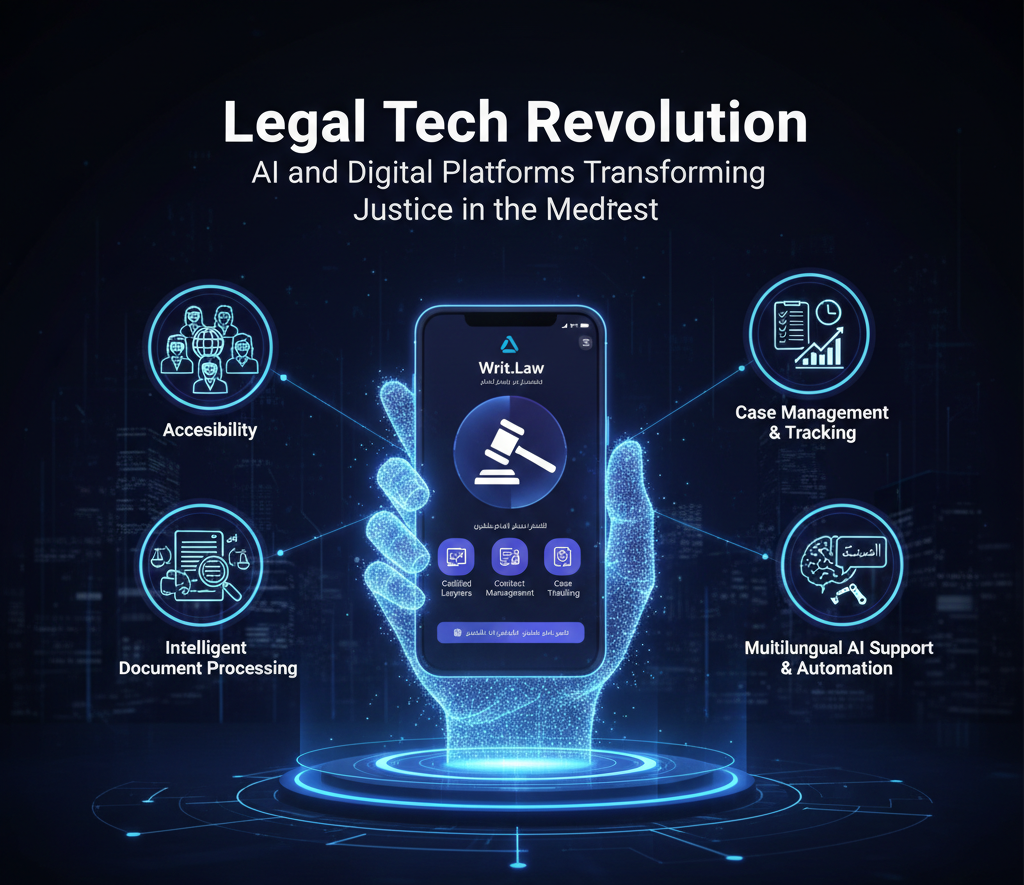
At GAIT, we understand that every industry has unique challenges that require tailored technological solutions. Our work on platforms like Writ.Law—an all-in-one legal services app—demonstrates how technology can bridge the gap between legal professionals and clients, making justice more accessible and efficient.
The Challenges Facing Traditional Legal Services
Before we explore the solutions, it's important to understand the pain points that have plagued the legal industry:
- Accessibility: Finding qualified legal counsel has traditionally been difficult, especially for individuals in remote areas or those unfamiliar with the legal system.
- Cost: Legal consultations and services can be prohibitively expensive, putting them out of reach for many people and small businesses.
- Time Consumption: Scheduling appointments, traveling to law offices, and waiting for document reviews can take weeks or even months.
- Language Barriers: In the Middle East, many legal platforms lack proper Arabic support, creating obstacles for native speakers.
- Transparency: Clients often struggle to track the progress of their cases or understand the legal processes involved.
How AI and Digital Platforms Are Transforming Legal Services
1. Instant Access to Legal Expertise
Mobile applications powered by AI are making it possible for anyone with a smartphone to connect with certified lawyers instantly. Through video consultations, chat features, and scheduling systems, clients can receive legal advice without leaving their homes. This democratization of legal services is particularly impactful in regions where legal resources are scarce.
2. Intelligent Document Processing
One of the most time-consuming aspects of legal work is drafting and reviewing contracts. AI-powered systems can now analyze legal documents, identify potential issues, suggest improvements, and even generate contracts based on templates and client requirements. This not only saves time but also reduces human error and ensures consistency.
3. Case Management and Tracking
Modern legal tech platforms provide clients with real-time updates on their cases. Through intuitive dashboards, clients can see the status of their legal matters, upcoming deadlines, required actions, and communication history—all in one place. This transparency builds trust and reduces the anxiety often associated with legal proceedings.
4. Multilingual Support
For legal tech to succeed in the Middle East, Arabic language support is not optional—it's essential. Advanced natural language processing (NLP) enables platforms to offer seamless experiences in Arabic, ensuring that legal services are truly accessible to the local population.
5. Cost Reduction Through Automation
By automating routine tasks such as document generation, appointment scheduling, and initial case assessment, legal tech platforms can significantly reduce operational costs. These savings can be passed on to clients, making legal services more affordable for individuals and small businesses.
GAIT's Approach to Legal Tech Innovation
At GAIT, we don't just build applications—we architect digital solutions that address real-world challenges. Our approach to developing legal tech platforms involves:
- Deep Industry Analysis: We work closely with legal professionals to understand their workflows, pain points, and client needs.
- User-Centric Design: Our platforms are designed with both lawyers and clients in mind, ensuring intuitive interfaces and seamless experiences.
- Robust Security: Legal matters involve sensitive information, so we implement advanced cyber security measures to protect client data.
- Scalable Architecture: We build platforms that can grow with your business, handling increasing users and expanding features without compromising performance.
- AI Integration: From chatbots that answer common legal questions to machine learning algorithms that predict case outcomes, we leverage AI to enhance every aspect of the legal experience.
The Business Impact of Legal Tech
The benefits of legal tech extend beyond convenience. For law firms and legal service providers, digital transformation offers:
- Increased Efficiency: Lawyers can handle more cases by automating routine tasks and focusing on high-value work.
- Expanded Reach: Digital platforms enable law firms to serve clients across geographical boundaries.
- Better Client Relationships: Transparency and accessibility lead to higher client satisfaction and retention.
- Competitive Advantage: Early adopters of legal tech gain a significant edge in an increasingly digital marketplace.
- Data-Driven Insights: Analytics provide valuable insights into case trends, client behavior, and operational efficiency.
The Future of Legal Services in the Middle East
As the Middle East continues its digital transformation journey, legal tech will play an increasingly important role. We can expect to see:
- Greater integration of AI for predictive analytics and legal research
- Blockchain technology for secure, tamper-proof legal records
- Virtual reality for remote court appearances and depositions
- Enhanced collaboration tools for legal teams working across multiple jurisdictions
- More sophisticated client portals with self-service capabilities
Conclusion: Building the Bridge to Digital Legal Services
The transformation of legal services through technology is not just about efficiency—it's about access to justice. By making legal services more affordable, accessible, and transparent, we're empowering individuals and businesses to protect their rights and navigate complex legal landscapes with confidence.
At GAIT, we're proud to be at the forefront of this transformation, building platforms that bridge the gap between legal expertise and those who need it. Whether you're a law firm looking to modernize your operations or an entrepreneur with a vision for legal tech innovation, we have the expertise and experience to turn your vision into reality.
Ready to explore how digital transformation can revolutionize your legal services? Contact GAIT today and let's build the future of legal tech together.