One Screen of Truth
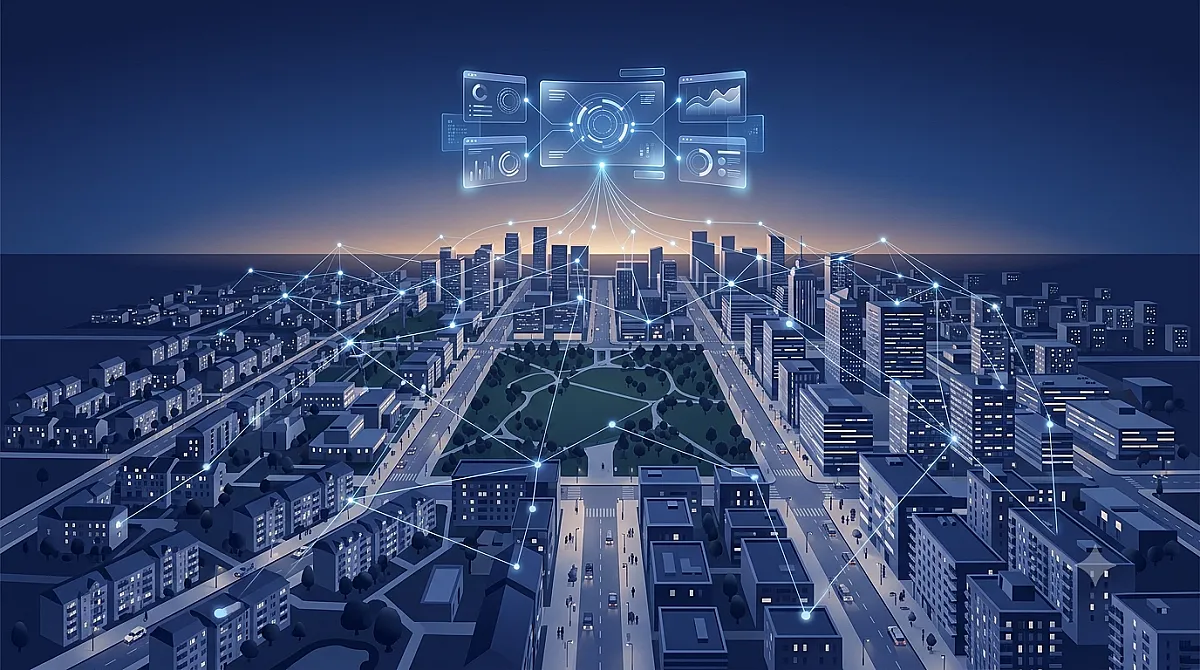
A modern urban community generates thousands of signals every day: complaints from the resident app, work orders opening and closing, permits at the gates, incidents from security, readings from utilities. Scattered across phones, papers, and inboxes, these signals are noise. Gathered on one screen, they become command.
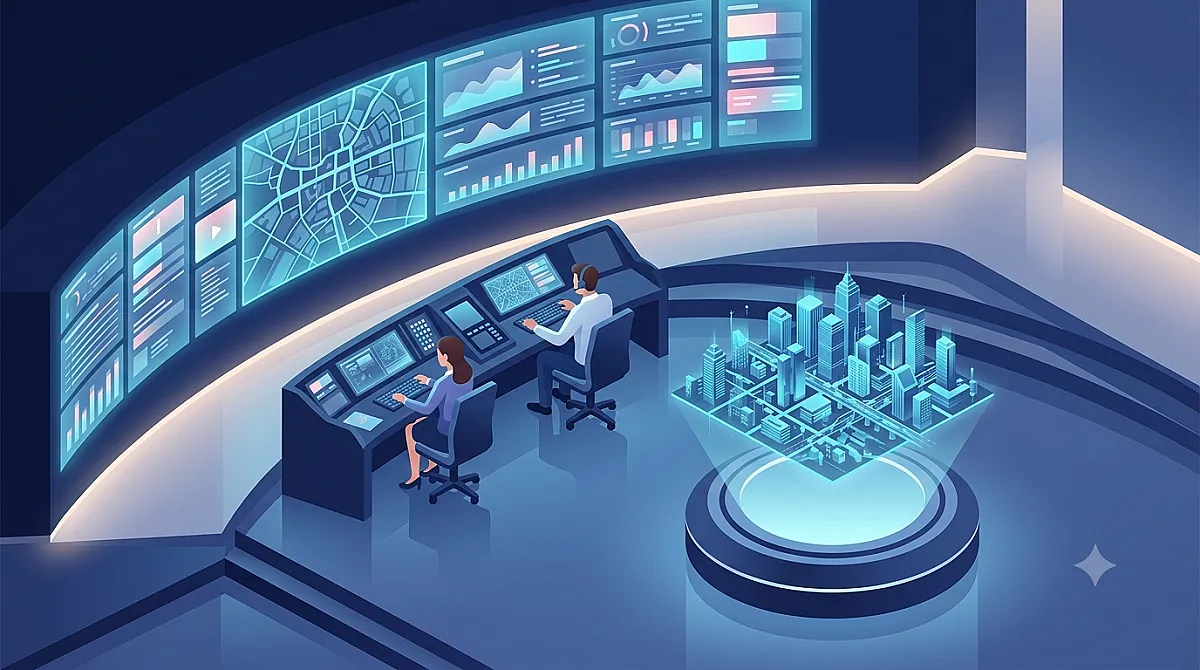
The operations room — the command center — is where the smart city platform comes together: a physical or virtual room where operators watch the entire community live and act before problems escalate.
What Flows Into the Room
- Resident signals — complaints, service requests, and satisfaction ratings from the community app.
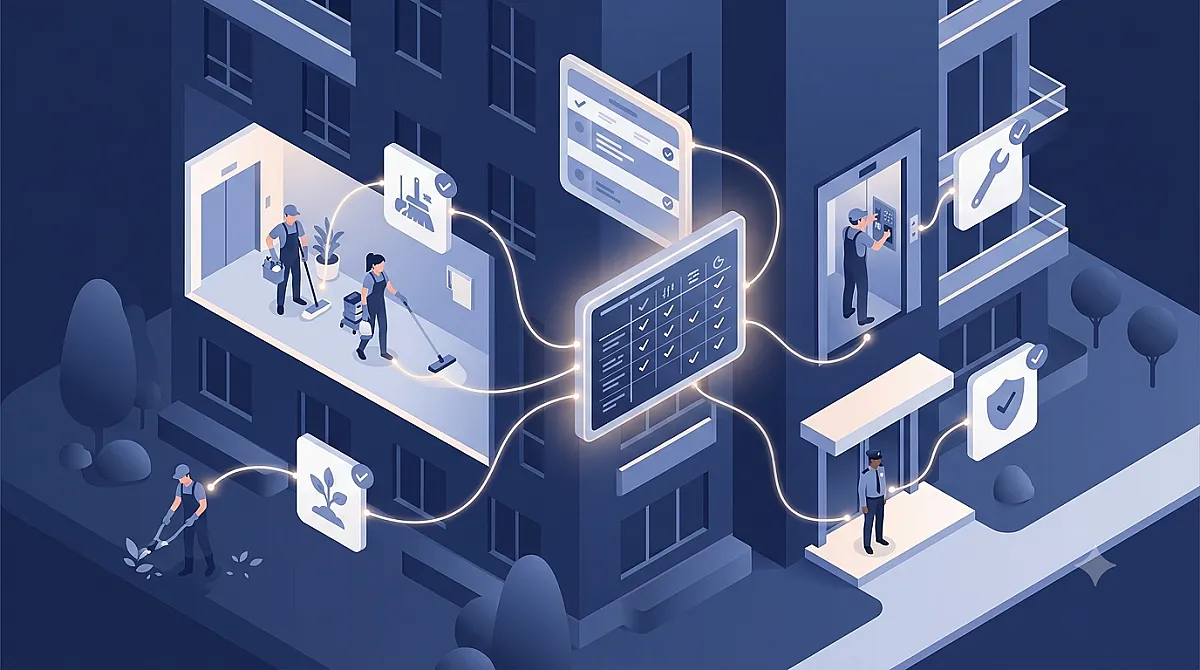
- Field operations — live status of every crew and work order from the workforce layer.
- Access & security — gate activity, visitor permits, and incident reports.
- Infrastructure — elevator outages, water and power interruptions, scheduled maintenance windows.
From Monitoring to Command
Live dashboards
Open requests by area, average response time today, overdue work orders, gate traffic — the vital signs of the city, updating in real time, visible to everyone in the room and to management anywhere.
Alerts and escalation
The system watches thresholds so humans don't have to: a complaint unanswered past its SLA, a spike of reports from one building, a critical asset down. Each alert carries an escalation path — who is notified, after how long, up to which manager.
Incident lifecycle
A burst pipe at 2 a.m. is not a phone-call scramble; it is an incident: opened, classified, assigned, tracked through resolution, and closed with a post-incident record. The next similar incident is handled faster because the playbook already exists.
Decisions backed by history
Weekly and monthly reports answer the questions boards actually ask: Which zones generate the most complaints? Which contractor misses deadlines? Is service improving quarter over quarter? The operations room turns gut feeling into evidence.
From Reactive to Proactive
The real transformation is cultural: teams stop firefighting and start anticipating. Recurring complaint patterns trigger preventive maintenance. Gate-traffic data reshapes security shifts. The city stops merely responding to its residents — it starts staying ahead of them.
Building this layer requires a partner who has built the layers beneath it. In the final article of this series, we look at how to choose the technology partner for your smart city project — or skip ahead and talk to GAIT now.